

WiFi development board based on ESP-8266EX with Arduino compatibility, 11 I/O pins, ADC input, OTA wireless upload, and onboard 5V 1A switching power supply for IoT projects


WiFi development board based on ESP-8266EX with Arduino compatibility, 11 I/O pins, ADC input, OTA wireless upload, and onboard 5V 1A switching power supply for IoT projects
ESP-8266EX WiFi Development Board with Arduino Compatibility and OTA Upload Support
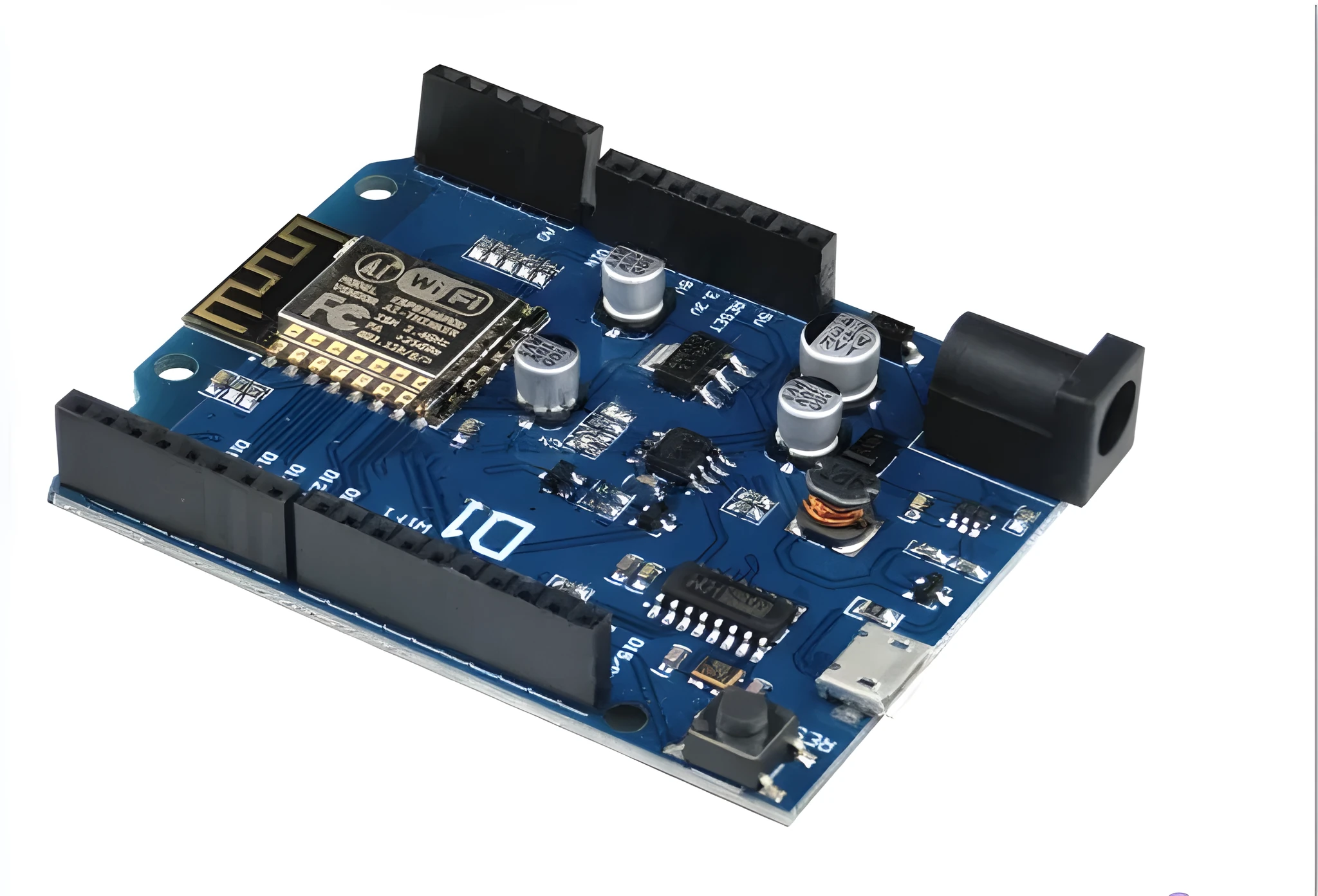
This WiFi development board provides a practical platform for creating Internet of Things (IoT) projects and wireless applications. Based on the ESP-8266EX chipset, it offers wireless connectivity while maintaining compatibility with the widely-used Arduino development environment. The board operates like an Arduino UNO after installing the necessary hardware package, making it accessible for educational settings, prototyping work, and professional IoT development. With support for Over-The-Air (OTA) wireless firmware uploads, developers can update projects remotely without physical connections to the board.
Features and Construction

The board combines the ESP-8266EX WiFi chipset with Arduino-compatible hardware architecture. This integration allows developers to leverage existing Arduino libraries and code examples while adding wireless capabilities to their projects. The construction includes a switching power supply built directly onto the board, eliminating the need for external power modules in many applications.
Material and Build
The development board incorporates the ESP-8266EX chipset as its core component, providing WiFi connectivity for IoT applications. The board features standard electronic construction with copper traces connecting the various components and interfaces. An onboard switching power supply provides 5V at 1A output, capable of accepting input voltages up to 24V maximum, which simplifies power management for connected peripherals and sensors.
Size and Practical Fit
While specific dimensions aren't provided in the source material, the board follows a development board format designed for prototyping work. The layout includes 11 digital I/O pins arranged for easy access and connection to breadboards or external circuits. The single ADC pin supports analogue sensor inputs within a 0-3.3V range, compatible with many common sensors used in IoT applications.
Uses and Placement
This development board serves multiple applications across educational, prototyping, and professional contexts. Its Arduino compatibility makes it particularly suitable for those already familiar with Arduino ecosystem who want to add WiFi capabilities to their projects without learning a completely new development environment.
Event or Professional Use
For professional IoT development, the board offers a cost-effective platform for prototyping wireless sensor networks, remote monitoring systems, and connected devices. The OTA wireless upload capability allows for remote updates to deployed devices, reducing maintenance overhead in field installations. The 11 I/O pins provide sufficient connectivity for most sensor and actuator combinations needed in commercial IoT applications.
Everyday Home Use
In home automation and DIY projects, this board enables creation of smart home devices, weather stations, and remote-controlled systems. The Arduino compatibility means hobbyists can find extensive community support, code examples, and tutorials. The onboard power supply simplifies setup by eliminating external power regulators for many basic projects involving sensors and small displays.
Benefits and Buying Value
This development board provides specific advantages for wireless project development through its combination of features. The integration of multiple functions onto a single board reduces component count and simplifies project assembly compared to separate WiFi module and microcontroller setups.
Reuse and Low Maintenance
The OTA wireless upload support enables ongoing updates to deployed projects without physical access to the hardware. This extends the useful life of projects by allowing feature additions and bug fixes after installation. The Arduino compatibility ensures access to a vast library of existing code and community knowledge, reducing development time for common functions and sensors.
Why Choose This Product
This board combines wireless connectivity with a familiar development environment, making it particularly suitable for those transitioning from wired Arduino projects to WiFi-enabled applications. The onboard power supply eliminates the need for additional voltage regulation components in many cases. With 11 digital I/O pins and an ADC input, it provides sufficient connectivity for most intermediate IoT projects without requiring external expansion in initial prototypes.